Artificial plant height and scale decisions usually become easier once the buyer stops asking only "How tall should it be?" and starts asking where the installation will sit, how far people will view it from, and whether the project needs stock size or custom size.
For wholesale and project buyers, the wrong scale creates practical problems: weak visual impact, blocked walkways, poor ceiling clearance, awkward sightlines, and a display that looks expensive but still feels undersized. We usually help buyers narrow this before samples or a formal quote.
If you are already comparing size options for a hotel, retail display, restaurant, mall, or mixed commercial order, the fastest next step is Send Inquiry.
Who this guide is for
We wrote this guide for:
- importers comparing stock sizes against custom-size requests
- hotel and restaurant buyers planning statement trees or supporting greenery
- retail-display teams checking whether a plant should read as background or focal point
- project buyers who need artificial plants to fit a defined ceiling height, walkway width, or visual axis
If you want the current product range first, start with Products. If you want broader supplier and export support first, use Wholesale of Artificial Plants. If you want the current assortment first, use Get Catalog.
Start with the commercial use, not the plant height
The same plant height can feel correct in one project and completely wrong in another.
We usually start by asking what role the plant should play:
- a statement piece in a lobby or entrance
- a backdrop or filler element in retail display
- a divider or soft screen in hospitality spaces
- a tabletop, counter, or shelf accent
- a repeated decorative unit across more than one store or project zone
That matters because the right scale is tied to function, not only dimensions.
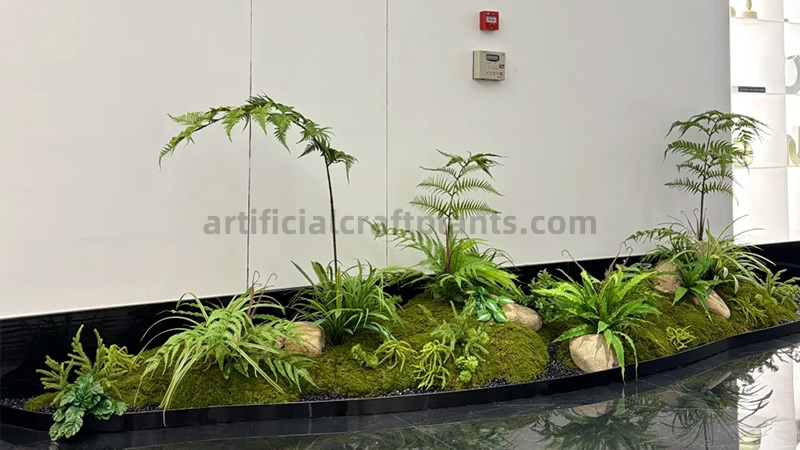
1. Check sightlines, walkway clearance, and ceiling height together
Commercial projects usually fail on scale when buyers only look at ceiling height and ignore how the plant will be seen.
We usually suggest checking:
- finished ceiling height, not rough building height
- whether the plant sits directly on the floor, on a planter, or on a raised base
- entrance width and nearby furniture scale
- main viewing distance
- whether the plant should stay below signage, lighting, or visual merchandising lines
A tree that looks good in a catalog photo can still feel wrong if it blocks the reception desk line, crowds a restaurant aisle, or disappears under a high lobby ceiling.
2. Different project zones need different scale logic
Lobby and entrance areas
For hotel lobbies, mall entries, and showroom entrances, buyers usually need stronger vertical presence. This is where custom large trees often make more sense than standard potted plants.
We usually suggest buyers think about:
- whether the tree should anchor the full entrance view
- whether the crown width needs to balance the surrounding furniture
- whether the trunk and planter should feel architectural, not decorative only
Retail display and branded backdrops
Retail and exhibition programs usually need plants that support products or branded moments without taking over the display.
Here the scale question is usually:
- should the plant frame the display
- should it create depth behind products
- should it repeat across multiple locations with the same dimensions
For these uses, cleaner silhouettes or modular foliage directions often work better than oversized mixed greenery.
Tabletop, counter, and shelf use
Smaller arrangements still need scale discipline. If the arrangement blocks conversation, pricing cards, product visibility, or customer eye contact, it is already too large for the application.
This is where real-touch flowers and selected decorative ornaments usually fit better than taller foliage.
3. Decide whether the project needs stock size or custom size
Not every project needs a custom height.
Stock size usually works better when the buyer needs:
- repeatable sizing across stores or locations
- faster first-round sampling
- simpler carton planning
- easier reorder consistency
Custom size usually makes more sense when the buyer needs:
- a tree or cactus to fill a very specific ceiling volume
- a stronger focal point for a hotel, mall, or commercial entrance
- a planter-plus-tree combination sized to a project drawing
- a non-standard crown width, trunk height, or overall visual proportion
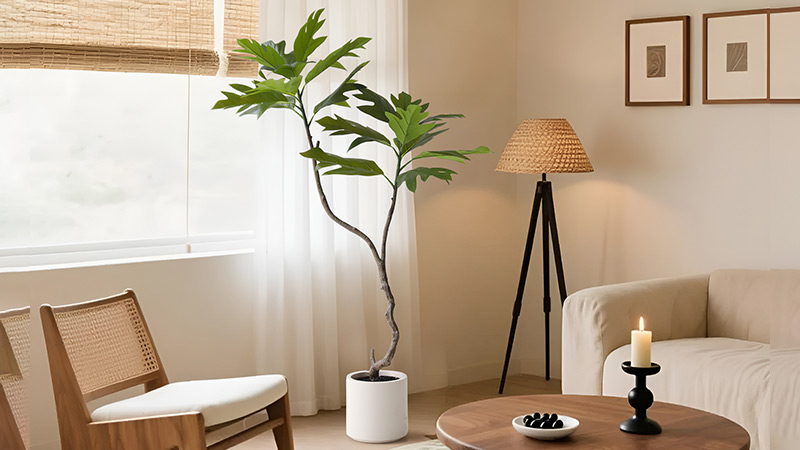
4. Use category logic, not one generic sizing rule
Different product lines solve different scale problems.
We usually see this pattern:
- custom large trees when the buyer needs vertical presence and a real architectural focal point
- artificial cactus when the project needs stronger shape definition without a very wide footprint
- artificial green walls when the project needs surface coverage instead of object height
- real-touch flowers for lower-height, close-view arrangements
- decorative ornaments when buyers need supporting accents around a main greenery program
The sizing conversation becomes much easier once the buyer first chooses whether the project needs height, width, surface coverage, or accent detail.
What we usually confirm before we recommend a size direction
| What we confirm | Why it matters |
|---|---|
| Installation area | A lobby, storefront, dining space, and backdrop zone do not use the same scale logic. |
| Floor-to-ceiling height | This defines the safe vertical range before the plant feels cramped or undersized. |
| Viewing distance | Close-view arrangements need different realism and proportion than long-view statement pieces. |
| Planter or base height | Total installed height is not only the plant itself. |
| Walkway or furniture clearance | Buyers need the plant to fit the space without hurting circulation or usability. |
| Stock vs custom preference | This affects lead time, sampling, and how precisely the plant can fit a drawing. |
Questions you can send if you want a faster size recommendation
If you want us to narrow the right height and scale faster, send:
- your country or project market
- the installation type: hotel, restaurant, retail display, mall, office, or showroom
- floor-to-ceiling height
- approximate installation width
- whether you want a focal-point tree, a supporting plant, or a backdrop effect
- whether you prefer stock size or custom size first
- reference photos or a simple drawing if available
Next step
If you are already comparing standard sizes against custom dimensions, use Send Inquiry for the fastest follow-up.
Use this guide with the right commercial pages
- Review the full assortment on Products.
- Use Wholesale of Artificial Plants for supplier and export support context.
- Check Custom large artificial trees for hotels, malls, and restaurants if your project needs larger statement pieces.
- Keep How to import artificial plants from China in 2025? open if the next question is sample, MOQ, or shipping planning.

Hello everyone, I'm Li!By day, I'm a seasoned expert in the artificial plant industry, starting from the factory floor and working my way up to running my own successful business. In my free time, I’m passionate about running and often join trail runs with friends.Here to share what I've learned—let's grow together!