How to Choose a Faux Palm Tree for High-Traffic Commercial Spaces
Choosing a faux palm tree for high-traffic areas requires prioritizing commercial-grade materials, UV and fire-resistant construction, and realistic aesthetics. The right selection reduces long-term maintenance costs by over 70% while maintaining a consistently professional ambiance, directly impacting client perception and operational efficiency.
Introduction
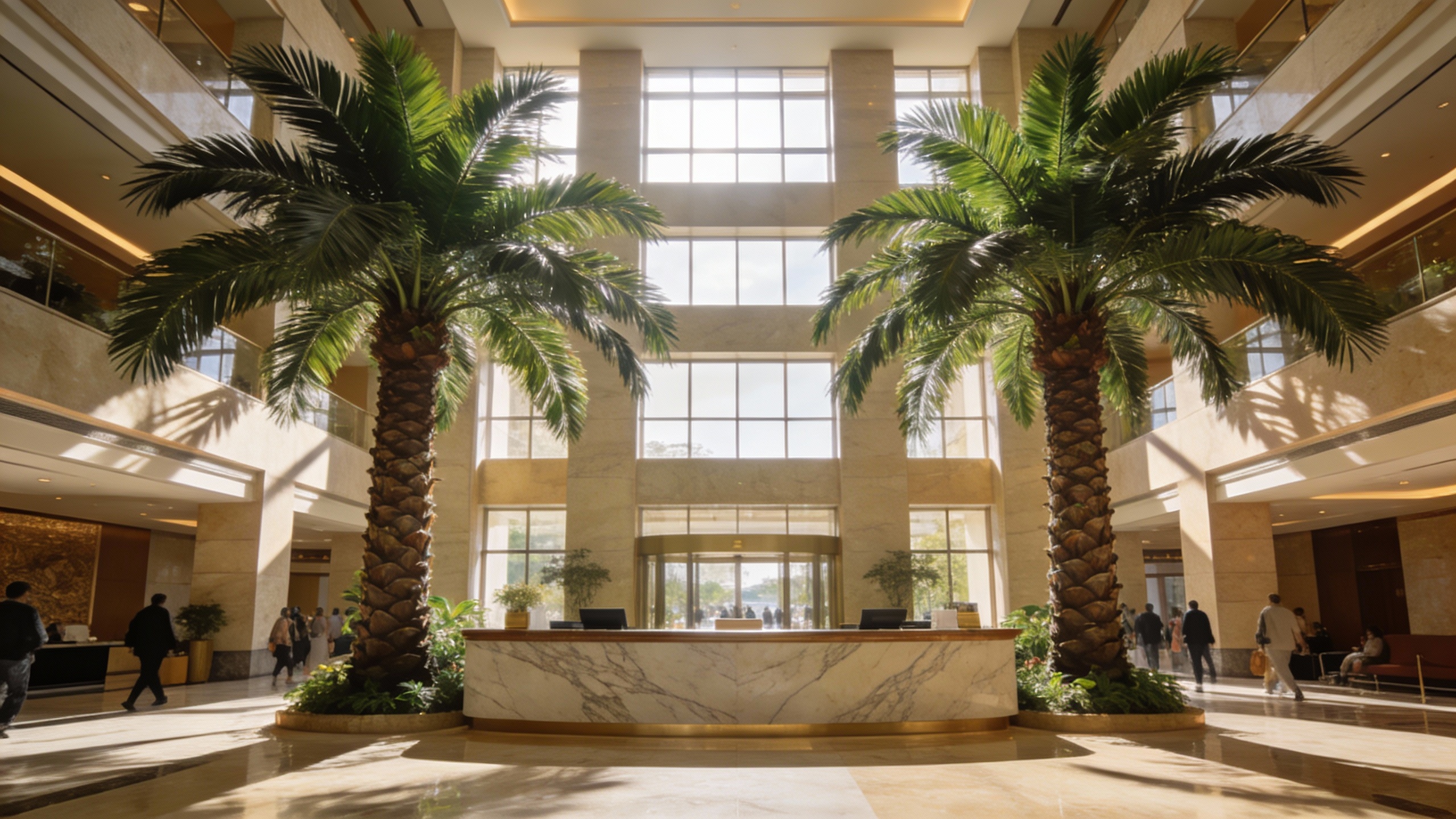
High-traffic indoor spaces like hotel lobbies, corporate atriums, and shopping centers demand greenery that enhances ambiance without creating operational headaches. Live plants require constant care, are susceptible to damage, and can fail under variable indoor conditions. This creates a cycle of replacement costs and inconsistent aesthetics. The solution is a strategically selected commercial faux palm tree, engineered for durability and realism to deliver permanent visual impact with zero maintenance.
What is a Commercial-Grade Faux Palm Tree?
- An artificial plant engineered with premium, durable materials like UV-inhibited polyethylene (PE) leaves and reinforced steel or fiberglass trunks, designed to withstand constant public interaction.
- It is certified for commercial use, meeting specific standards for fire resistance (like ASTM E84 Class A), colorfastness, and structural integrity over many years.
Key Features & B2B Analysis
Selecting a palm tree based on features alone is insufficient. Each specification must be linked to a tangible business outcome.
1. Material Composition: PE vs. Silk
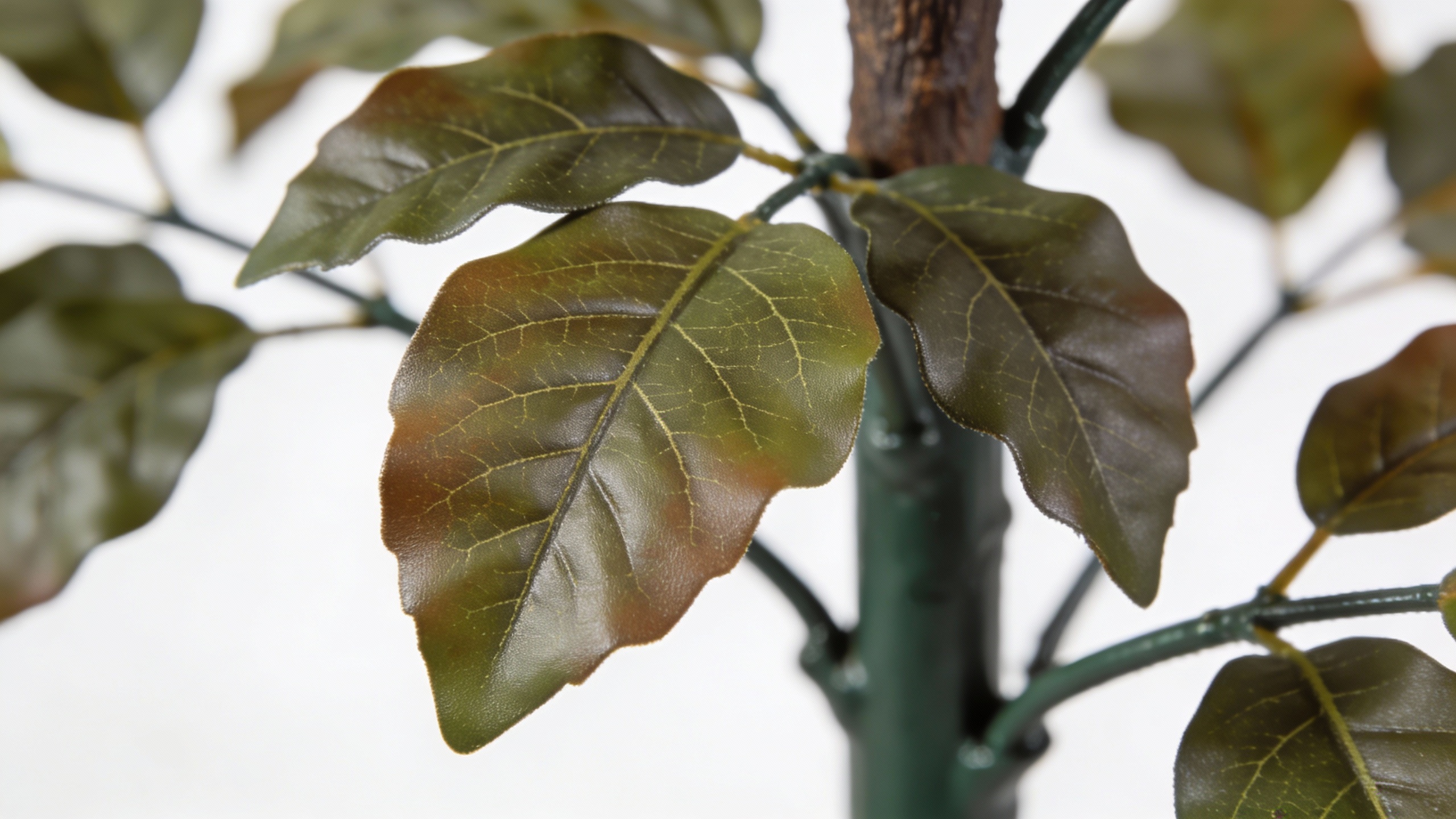
Polyethylene (PE): Modern PE leaves are molded from real botanical specimens, offering intricate vein detail and natural color variation. This means the tree maintains a hyper-realistic appearance from any distance, enhancing the premium feel of your space and positively influencing client or customer perception.
Traditional Silk/Polyester: This material is prone to fading and can appear shiny or artificial under bright lobby lighting. This means a shorter lifespan and a potential decline in the professional image of the space, leading to more frequent replacement costs.
2. Structural Integrity & Safety Standards
The internal frame should be heavy-gauge, powder-coated steel. This means exceptional stability, preventing tipping in busy areas and reducing liability risks.
Industry Standard Reference: For any indoor commercial installation, the materials must comply with ASTM E84 (Class A Fire Resistance). This is non-negotiable for corporate, hospitality, or healthcare settings and is often a requirement for building insurance and code compliance.
Comparative Analysis: Commercial-Grade vs. Consumer-Grade
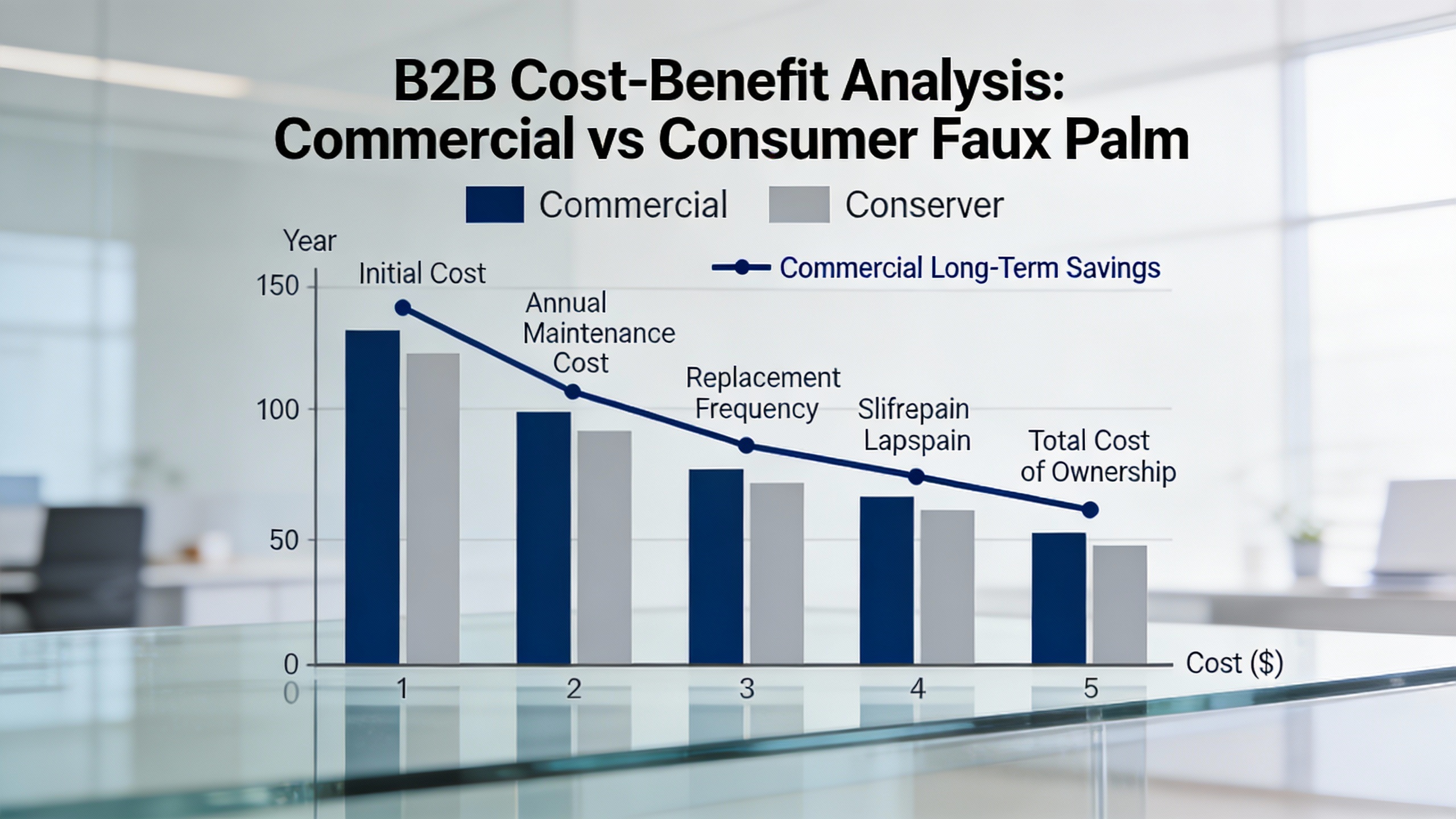
The core decision lies in investment level. A consumer-grade tree is a purchase; a commercial-grade tree is a capital investment in your space's long-term aesthetic.
| Feature | Commercial-Grade Faux Palm | Consumer-Grade Faux Palm | Impact on Business |
|---|---|---|---|
| Durability | UV-resistant, crush-recovery leaves; steel frame. | Basic plastic/PVC leaves; lightweight frame. | Commercial: Withstands cleaning, bumps, and sun for 5-10+ years. Consumer: Shows wear/damage in 1-2 years, requiring replacement. |
| Realism | Botanically accurate PE leaves; natural trunk textures. | Often shiny, uniform colors; simplistic trunk design. | Commercial: Consistently projects a high-end, cared-for image. Consumer: Can detract from professional ambiance upon close inspection. |
| Lifetime Cost | Higher initial cost, near-zero maintenance. | Low initial cost, high replacement frequency. | Commercial: Lower total cost of ownership (TCO). Consumer: Higher TCO due to recurring replacement purchases and labor. |
| Safety Certifications | Typically includes ASTM E84 Class A fire rating. | Rarely includes commercial fire ratings. | Commercial: Meets insurance and building code requirements. Consumer: May not be permissible for many commercial installations. |
Expert Verdict: Pros & Cons
Best For: Corporate headquarters, luxury hotel lobbies, high-end retail spaces, airports, and healthcare facilities where first impressions are critical and budget is allocated for long-term value.
-
Pros:
- Zero Operational Maintenance: Eliminates costs for watering, pruning, pest control, and replacement of dying plants.
- Consistent Aesthetic: Provides perfect, weather-independent greenery 365 days a year, ensuring brand image is always maintained.
- Durability ROI: Withstands high traffic, cleaning chemicals, and variable HVAC conditions, protecting the initial investment.
- Allergy-Free & Hygienic: Ideal for spaces where live plants may trigger allergies or attract insects.
-
Cons:
- Higher Initial Capital Outlay: Premium commercial trees require a significant upfront investment compared to live plants or consumer artificials.
- Insider Reality – Dust Accumulation: While "maintenance-free," they will require occasional dusting to maintain optimal appearance, a factor often overlooked in planning.
- Perception Management: Some clients may need education on the quality and benefits of modern faux botanicals to overcome outdated stereotypes.
Conclusion
The choice for a high-traffic space is not merely about buying a decorative item but investing in a durable, realistic asset. Prioritize UV-resistant PE materials, a robust metal frame, and verifiable fire safety certifications. This approach transforms a line-item expense into a strategic decision that reduces long-term operational costs, guarantees a permanently impeccable environment, and protects your brand's visual equity. Evaluate suppliers based on their knowledge of these commercial specifications and their ability to provide product documentation for compliance.

Hello everyone, I'm Li!By day, I'm a seasoned expert in the artificial plant industry, starting from the factory floor and working my way up to running my own successful business. In my free time, I’m passionate about running and often join trail runs with friends.Here to share what I've learned—let's grow together!