Top 5 Faux Plant Materials for Durability in Retail Environments
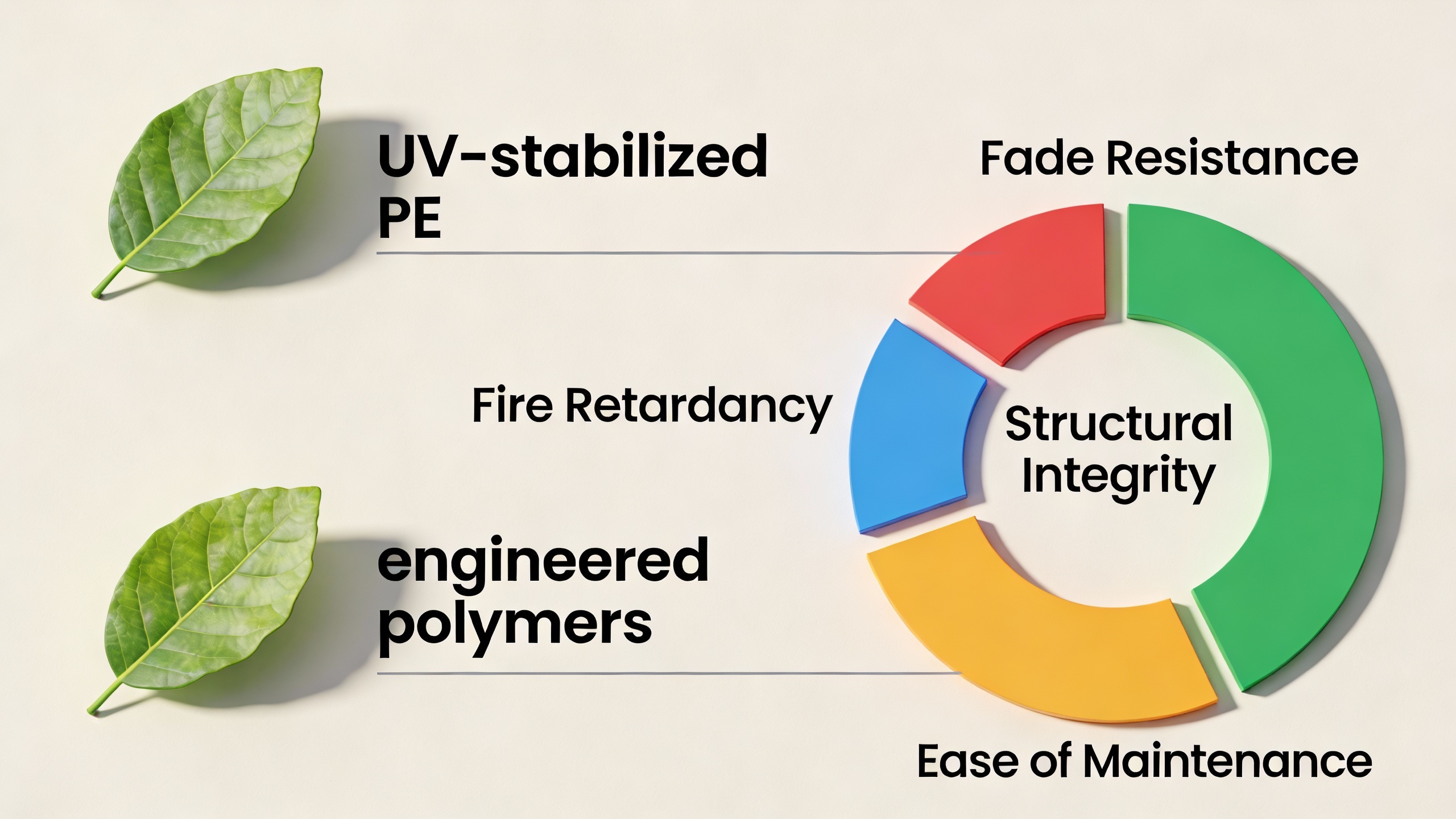
For retail environments, the most durable faux plant materials are UV-stabilized polyethylene (PE)[1] and certain engineered polymers. These materials resist fading from constant lighting, withstand physical handling, and meet stringent fire safety codes[2], which directly reduces replacement costs and maintenance labor over time.
Introduction
Retail managers face a constant dilemma: the need for vibrant, natural decor to enhance customer experience versus the high cost and upkeep of real plants. In high-traffic areas, live plants wilt, drop leaves, and require specialized care, creating ongoing expense and inconsistency. The solution lies in high-fidelity artificial plants, but not all materials can withstand the rigors of a commercial setting. Choosing the wrong material leads to rapid fading, dust accumulation, and safety concerns, undermining the investment.

What Makes a Faux Plant Material Durable for Retail?
- Fade Resistance: Ability to withstand prolonged exposure to intense retail lighting (LED, halogen, natural light) without significant color loss.
- Structural Integrity[3]: Material must be flexible yet resilient to occasional customer contact, cleaning, and repositioning without tearing or permanent deformation.
- Fire Retardancy: Compliance with commercial building and fire codes (e.g., ASTM E84 Class A) is non-negotiable for most retail spaces.
- Easy Maintenance: Surface should resist static dust attraction and be cleanable with standard, non-abrasive cleaners.
Key Features & B2B Analysis
Selecting a material is not about aesthetics alone; it's a capital expenditure decision. Each material's properties translate directly to operational outcomes like maintenance schedules, lifecycle cost, and risk mitigation.
1. UV-Stabilized Polyethylene (PE)
This is a premium, molded material often used for high-end replicas. The UV inhibitors are embedded during manufacturing, which means the color protection is integral and long-lasting, not a surface coating that can wear off. For a retailer, this translates to a fixture that maintains its vibrancy for 5+ years even in sun-drenched atriums or under bright spotlights, protecting the store's curated ambiance.
2. Engineered Polymers & Polyblends
Advanced manufacturers use proprietary polymer blends to achieve specific textures and strengths. These materials are often designed for outdoor commercial use, which means they inherently possess exceptional resistance to environmental stress cracking and temperature fluctuations. For a business, this guarantees performance consistency across various store locations, from humid coastal malls to dry, climate-controlled environments.
3. Fire Safety and Industry Standards
In retail, safety is paramount. Look for materials that are inherently flame-retardant or treated to meet ASTM E84 (Class A Fire Spread Rating). This isn't just a feature; it's a critical risk mitigation factor. Using non-compliant materials can void insurance policies and fail fire marshal inspections, which means choosing the right material is essential for legal and operational security.
Comparative Analysis: Material Durability & Business Impact
The choice of material dictates total cost of ownership. A cheaper initial purchase often leads to higher long-term costs.
| Feature | Silk / Polyester | Plastic (PVC/PE) | Latex | UV-Stabilized Polyethylene (PE) | Engineered Polymers |
|---|---|---|---|---|---|
| Fade Resistance | Poor; dyes degrade quickly. | Low/Moderate; varies. | Moderate; can oxidize. | Excellent; UV inhibitors. | Superior; built for outdoors. |
| Tear/Shape Strength | Low; delicate, prone to fraying. | High; rigid but can crack. | High; flexible but can degrade. | High; molded, resilient. | Very High; engineered durability. |
| Fire Safety | Often requires treatment. | Can be formulated to Class A. | Typically flammable. | Often inherently Class A. | Designed to meet strict codes. |
| Impact on Business | High replacement cost, frequent upkeep. | Good for low-light, low-touch areas. | Risk of degradation in humidity. | Low lifecycle cost, consistent look. | Highest ROI for harsh conditions. |
Expert Verdict: Pros & Cons
Best For: National retail chains, high-traffic flagship stores, atriums with skylights, and hospitality-facing retail where consistency and low maintenance are critical.
-
Pros:
- Long-Term ROI: Superior materials like UV-stabilized PE and engineered polymers last 3-5 times longer than basic alternatives, amortizing the initial higher cost.
- Brand Consistency: Eliminates the variable of dying plants, ensuring every store location presents the same pristine image year-round.
- Operational Efficiency: Drastically reduces staff time spent on watering, pruning, or replacing decor, allowing focus on customer service.
-
Cons:
- Higher Initial Cost: Premium durable materials command a higher price point than entry-level silk or plastic plants.
- Insider Reality: Not all "commercial grade" labels are equal. Require suppliers to provide data sheets on UV stability and fire ratings.
- Weight: Denser, more durable materials can be heavier, potentially requiring more robust support structures for large installations.
Conclusion
In retail, faux plants are not mere decorations; they are durable assets. The investment in top-tier materials like UV-stabilized polyethylene and engineered polymers pays dividends through reduced maintenance, guaranteed safety compliance, and unwavering visual appeal. Prioritize vendors who transparently provide material specifications and safety certifications. This upfront diligence ensures your green investment remains vibrant and cost-effective for years, supporting both your brand experience and your bottom line.
References

Hello everyone, I'm Li!By day, I'm a seasoned expert in the artificial plant industry, starting from the factory floor and working my way up to running my own successful business. In my free time, I’m passionate about running and often join trail runs with friends.Here to share what I've learned—let's grow together!