Shopping Mall Display Ideas with Large Artificial Trees: A B2B Guide to Boosting Footfall and Dwell Time
Large artificial trees are a strategic investment for shopping malls, transforming sterile atriums and corridors into engaging, branded environments. By using commercial-grade UV-resistant trees[2][1] in thematic displays, seasonal installations, or interactive zones, malls can significantly improve visual appeal, guide customer flow, and create memorable experiences that directly contribute to increased dwell time and perceived value.
Introduction
Shopping malls face intense competition from online retail and experiential destinations. A common pain point is the creation of a generic, forgettable environment that fails to engage visitors. This lack of distinctive character can lead to shorter visits and lower spending. The solution lies in strategic environmental design[3]. Large artificial trees offer a versatile and effective tool to agitate this static atmosphere, providing a low-maintenance, high-impact method to craft immersive spaces that captivate shoppers and encourage exploration.
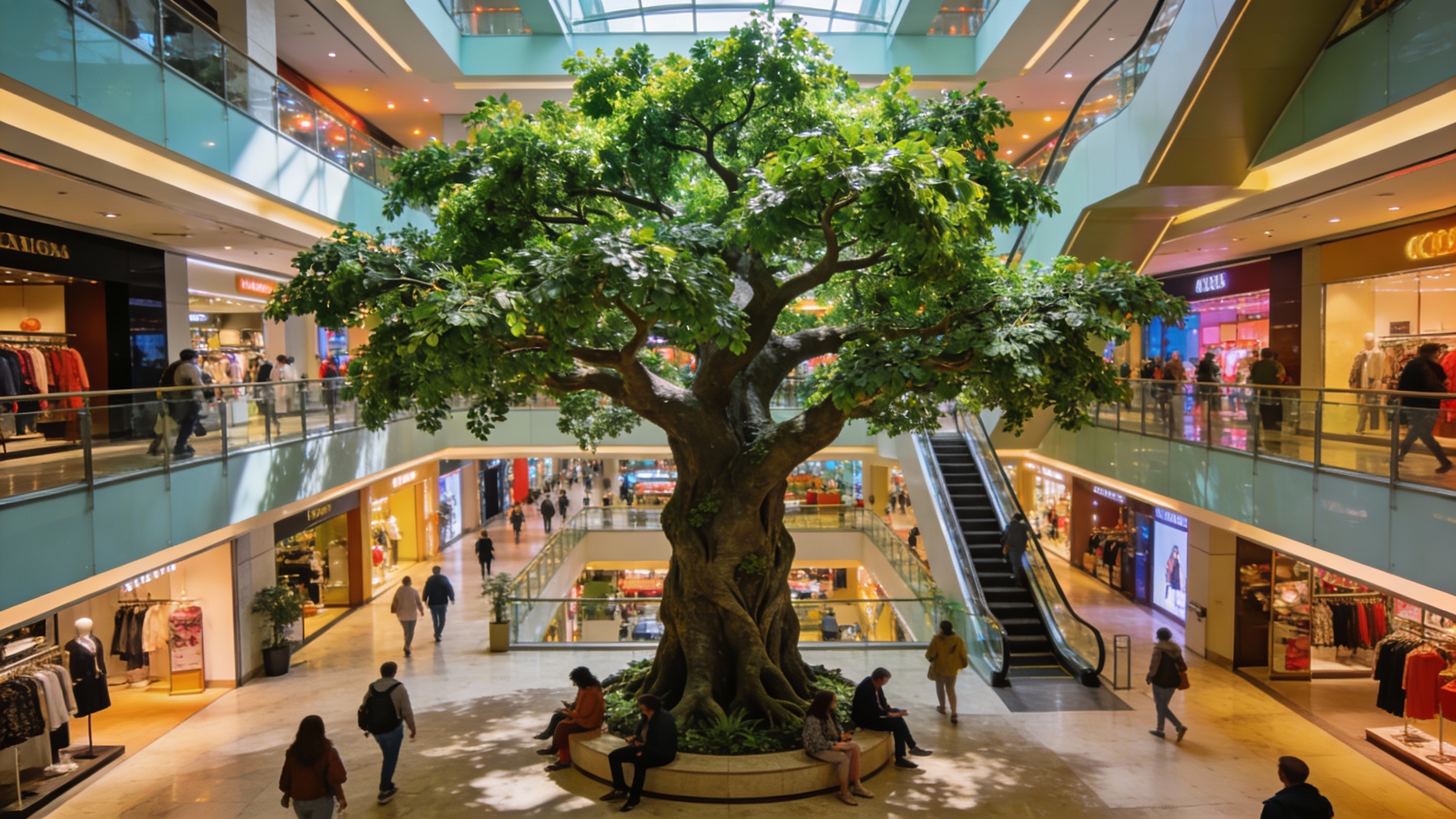
What are Large Artificial Tree Displays?
- Commercial-Grade Installations: These are not consumer products. They are engineered structures using high-density polyethylene (HDPE) leaves, steel-reinforced trunks, and UV-stabilized materials designed for 24/7 public exposure and safety.
- Strategic Design Elements: They function beyond decoration. These displays are used for wayfinding, zoning, thematic branding (e.g., tropical, enchanted forest), and creating focal points that draw visitors deeper into the mall.
Key Features & B2B Analysis
The value of these displays is measured not by their beauty alone, but by their contribution to operational and commercial goals.
1. Thematic Versatility & Seasonal Agility
A single, permanent tree can be the anchor for rotating thematic displays. For example, a large artificial maple can be adorned with autumn leaves and harvest motifs in fall, then with fairy lights and ornaments for winter, which means the mall can execute high-impact seasonal campaigns without the cost and logistics of sourcing, maintaining, and disposing of live flora, ensuring a fresh look that encourages repeat visits.
2. Commercial Durability & Safety Compliance
Top-tier displays are constructed from Class A fire-retardant materials (meeting standards like ASTM E84 for low flame spread) and are treated for UV resistance (rated 8+ on the Blue Wool Scale) to prevent fading under atrium skylights. This means virtually zero maintenance (no watering, pruning, or pest control), elimination of leaf litter, and guaranteed compliance with stringent mall safety codes, reducing liability and operational overhead.
Comparative Analysis: Thematic Zones vs. Focal Point Displays
| Feature | Thematic Zone (e.g., "Enchanted Forest" Lounge) | Grand Focal Point (e.g., Central Atrium Banyan) | Impact on Business |
|---|---|---|---|
| Objective | Create immersive, Instagrammable seating/play areas. | Establish a majestic, brand-defining landmark. | Zones increase dwell time in specific areas; focal points improve overall aesthetic brand value. |
| Scale | Multiple trees (medium to large) with complementary decor. | One or two exceptionally large, statement trees. | Zones require higher initial density investment; focal points offer a singular, high-visibility impact. |
| Customer Engagement | High interaction, encourages social sharing. | Awe-inspired viewing, primary photo backdrop. | Zones directly promote social media visibility; focal points become synonymous with the mall's identity. |
| Best Location | Food courts, family lounges, corridor expansions. | Main entrance, central atrium, escalator wells. | Zones target areas where extended停留 is desired; focal points optimize first impressions and navigation. |
Expert Verdict: Pros & Cons
Best For: Mid to high-tier shopping malls, entertainment complexes, and property managers looking to enhance ambiance with a calculable ROI.
-
Pros:
- Predictable OPEX: Eliminates all ongoing horticultural costs (water, soil, fertilizers, specialized labor).
- Design Consistency: Provides perfect, unchanging form 365 days a year, regardless of climate or season.
- Durability: Withstands high traffic, accidental contact, and variable indoor climates without degradation.
- Branding Integration: Trunks can be subtly lit with brand colors, and foliage can be accessorized to support marketing campaigns.
-
Cons:
- High Initial CAPEX: Quality commercial artificial trees represent a significant upfront investment compared to initial live plant costs.
- Insider Reality – Perceived Value: Some patrons may initially perceive them as "less authentic" than live plants, requiring clever integration into the overall design narrative to overcome this bias.
- Logistics: Installation of very large specimens requires professional handling and planning for access (doorways, ceiling height).
Conclusion
Integrating large artificial trees is a strategic decision in commercial environmental design. The focus shifts from simple decoration to creating engineered experiences that address core business metrics: enhancing ambiance to increase dwell time, enabling agile thematic changes to drive repeat visits, and providing a consistent, low-maintenance visual asset. The investment is justified not in the cost of the tree itself, but in its measurable contribution to creating a more engaging and commercially successful retail environment.
References

Hello everyone, I'm Li!By day, I'm a seasoned expert in the artificial plant industry, starting from the factory floor and working my way up to running my own successful business. In my free time, I’m passionate about running and often join trail runs with friends.Here to share what I've learned—let's grow together!