Maintenance and Cleaning Guide for Faux Plants in Commercial Retail Spaces
Effective maintenance of faux plants in retail environments requires a scheduled, three-tiered protocol: regular light dusting, quarterly deep cleaning, and annual UV protection audits[1]. This systematic approach prevents dust accumulation, preserves color vibrancy, and extends the asset's lifespan, which directly protects your decor investment and maintains a premium customer experience.
Introduction
Commercial retail spaces invest in high-quality faux flora to create inviting atmospheres without the variable costs and labor of live plants. However, dust accumulation, fading from spotlights, and accidental stains can quickly degrade their premium appearance. This deterioration subtly undermines brand perception and necessitates premature replacement. Implementing a disciplined, professional maintenance routine is the solution to maximize the longevity and return on investment of these decorative assets.

What is Professional Faux Plant Maintenance?
- A Proactive Regimen: It is a scheduled, multi-step cleaning and preservation process tailored to the specific material (silk, plastic, polyester) and environmental exposure (dust, UV light, humidity) of artificial botanicals in high-traffic settings.
- An Asset Management Strategy: Beyond cleaning, it involves periodic inspection for wear, strategic placement to minimize damage, and interventions to mitigate environmental degradation, treating the plants as depreciating capital assets.
Key Features & B2B Analysis
A proper maintenance program isn't just about cleaning; it's about protecting capital expenditure and ensuring consistent brand presentation.
Tier 1: Routine Light Dusting (Weekly/Bi-Weekly)
This is the first line of defense. Use a feather duster, microfiber cloth, or a can of compressed air for intricate pieces. For retail, this task is often integrated into opening or closing procedures.
- B2B Impact: Regular dusting prevents buildup that becomes harder to remove, which means your quarterly deep cleans are faster, less labor-intensive, and require fewer specialized cleaning agents, reducing long-term operational costs.
Tier 2: Quarterly Deep Cleaning
This is a non-negotiable process for maintaining a "like-new" appearance. The method depends on the plant's material and construction.
- For Dust-Only Buildup: Use a handheld steamer, maintaining a 6-8 inch distance. The vapor loosens dust, which then evaporates.
- For Sticky Residue or Grime: Prepare a solution of mild dish soap (like Dawn) and lukewarm water. Use a soft-bristle brush (e.g., a makeup brush) for leaves and a microfiber cloth for stems. Always spot-test in an inconspicuous area first.
- Rinse-Free Method: Dampen a cloth with a mixture of 1 part white vinegar to 3 parts water. Wipe each leaf. The vinegar cuts grime and evaporates without leaving residue.
- B2B Impact: A scheduled deep clean maintains the visual premium quality of the decor, which means it continues to positively influence customer dwell time and perception without the need for costly seasonal replacements.
Tier 3: Annual Inspection & UV Protection
This tier addresses the primary cause of long-term failure: photodegradation from commercial lighting.
- Industry Standard Reference: Look for plants treated with UV inhibitors or UV-resistant coatings. While there's no single ISO standard for faux plants, high-quality manufacturers often reference ASTM G154 (fluorescent UV exposure apparatus) testing to quantify colorfastness.
- Action: Annually, inspect plants near windows or under direct halogen/spot lighting for fading. Apply a commercial-grade UV protectant spray designed for plastics and fabrics. This forms a clear shield that absorbs harmful radiation.
- B2B Impact: Proactive UV management can extend the usable life of a faux plant by 2-3 years, which means directly lowering the total cost of ownership and deferring capital outlay for new decor.
Comparative Analysis: Reactive vs. Proactive Maintenance
A structured approach transforms maintenance from a cost center to a value-preserving activity.
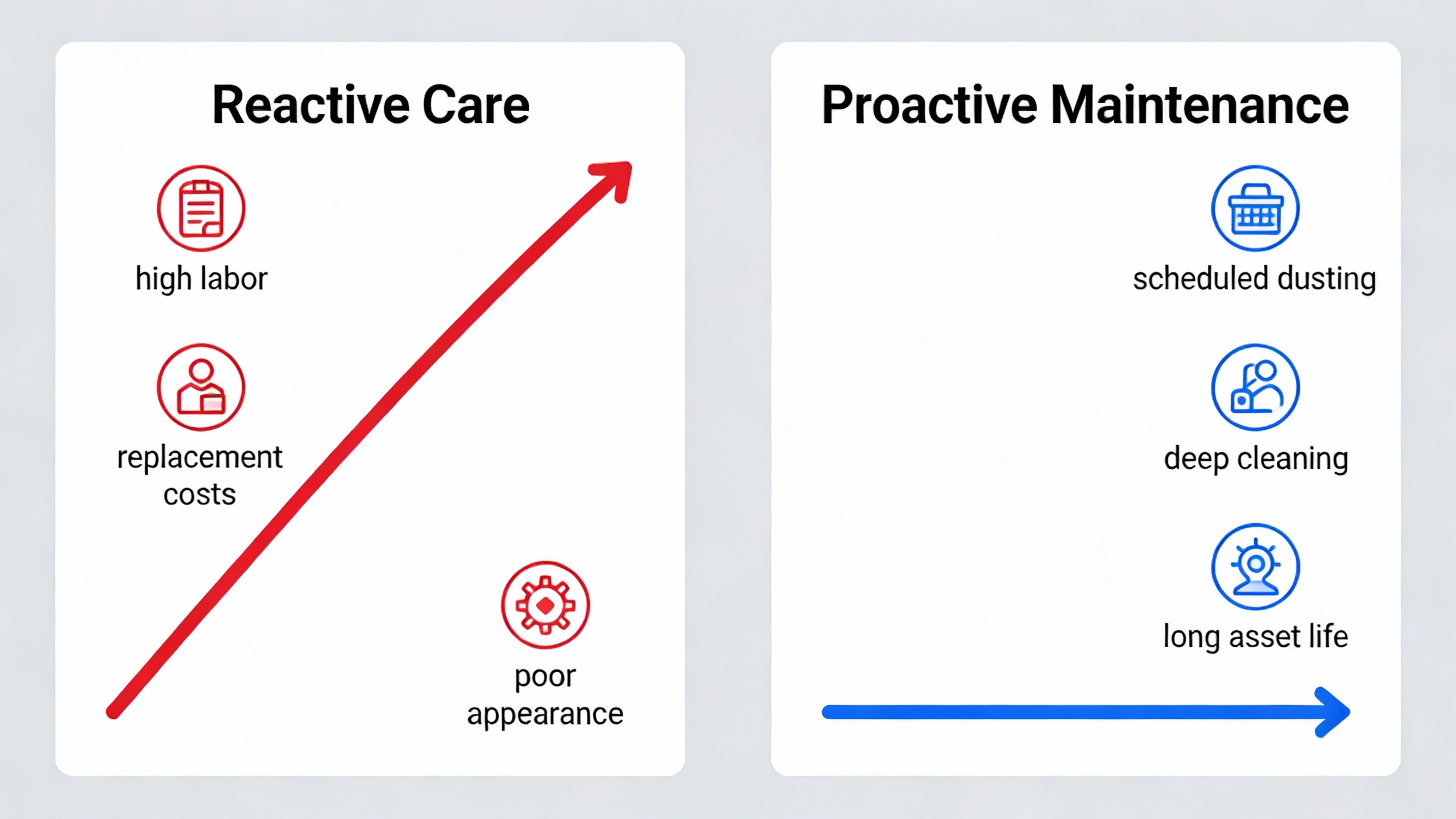
| Feature | Reactive ("Clean When Dirty") | Proactive (Scheduled Protocol) | Impact on Business |
|---|---|---|---|
| Labor Cost | High, intensive "rescue" cleans | Low, distributed, efficient tasks | Predictable, lower annual OPEX. |
| Plant Lifespan | Shortened (3-4 years) | Maximized (7+ years) | Higher ROI on initial purchase. |
| Brand Image Consistency | Unreliable; periods of dinginess | Consistently premium | Protects brand equity and customer experience. |
| Annual Budget | Unpredictable spikes | Flat, predictable line item | Easier financial planning and allocation. |
Expert Verdict: Pros & Cons
Best For: Multi-location retail chains, high-end boutiques, and corporate lobbies where brand image is paramount and operational efficiency is required.
- Pros:
- Capital Preservation: Dramatically extends the lifespan of decorative assets, protecting significant upfront investment.
- Operational Efficiency: Creates a standardized, trainable process for facility or janitorial teams.
- Risk Mitigation: Prevents the "neglected" look that can subtly drive customers away.
- Cons:
- Requires Discipline: Must be integrated into existing facility management schedules to be effective.
- Insider Reality: Even with perfect care, ultra-high-traffic areas (e.g., within constant customer reach) will show wear and may require strategic rotation or more frequent spot-cleaning.
Conclusion
Treating faux plant maintenance as a core component of retail facility management is a strategic decision. The three-tiered protocol—light dusting, deep cleaning, and UV protection—transforms these elements from disposable decor into durable, cost-effective assets. The result is a perpetually fresh environment that supports your brand promise, minimizes long-term expenses, and allows your team to focus on customers, not cleaning crises.
Ready to standardize care across all locations? Download our free B2B Maintenance Checklist for Facility Managers.
References

Hello everyone, I'm Li!By day, I'm a seasoned expert in the artificial plant industry, starting from the factory floor and working my way up to running my own successful business. In my free time, I’m passionate about running and often join trail runs with friends.Here to share what I've learned—let's grow together!