Fire Retardant Artificial Ficus Tree for Shopping Mall Display: The Complete B2B Guide
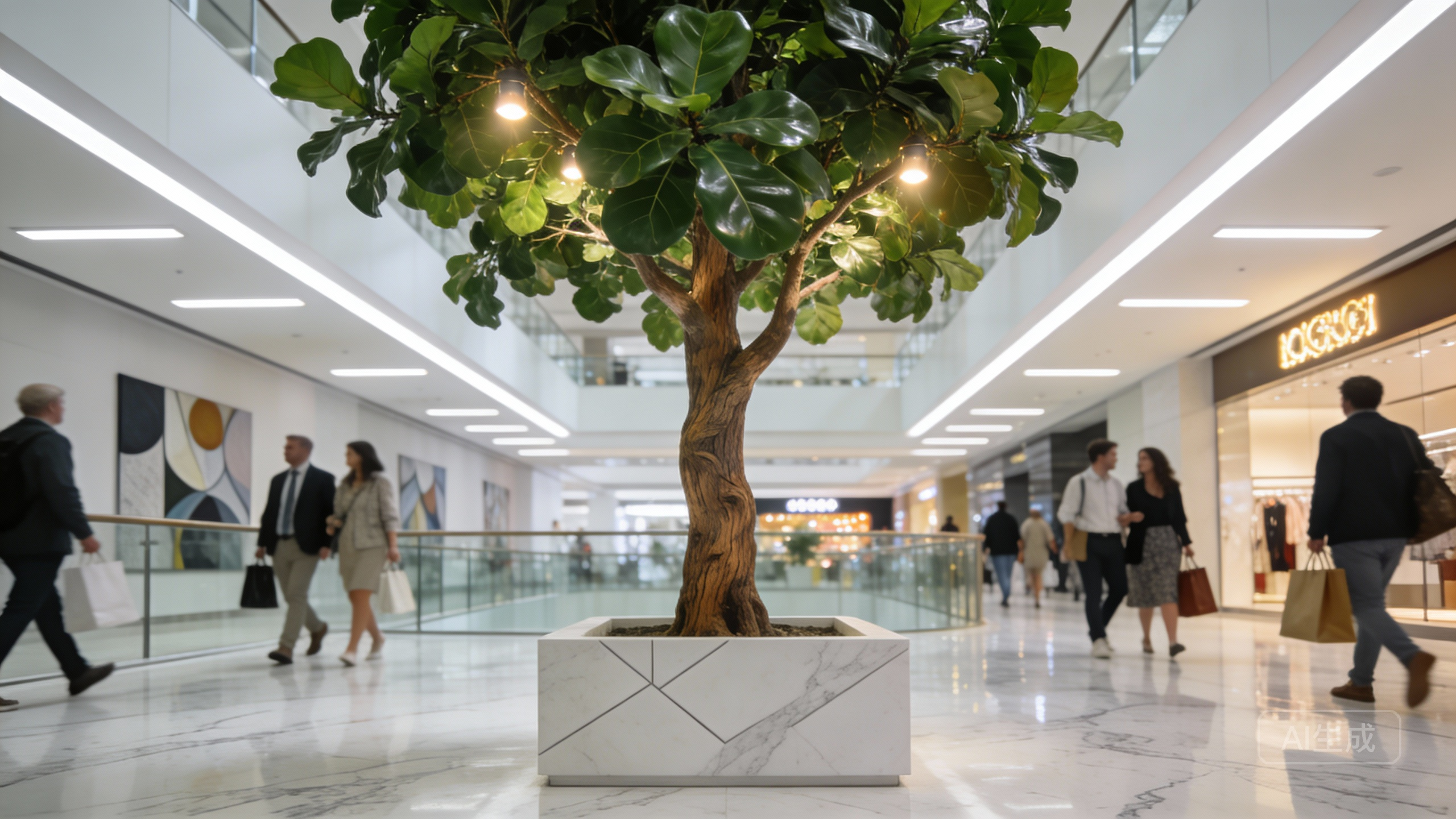
A fire retardant artificial ficus tree is a commercial-grade display solution engineered for high-traffic public spaces like shopping malls. These are not standard faux plants; they are constructed with inherently flame-resistant materials (typically PE/plastic) and often treated with chemical retardants to meet strict international fire safety standards such as BS 5852 or NFPA 701. For facility managers and procurement teams, the primary value lies in eliminating a significant fire hazard while achieving a permanent, zero-maintenance greenery display that withstands constant public interaction, reducing long-term operational costs and liability.
Introduction
Problem: Shopping malls require lush, consistent greenery to enhance ambiance, but live trees pose multiple risks: constant watering, pruning, pest control, and, most critically, they are a potential fuel source in a fire emergency. A single lit cigarette or electrical fault near a dry live plant can escalate quickly.
Agitation: This creates ongoing maintenance expenses, inconsistent aesthetics as plants die, and significant liability. Safety inspectors can flag non-compliant greenery, leading to fines or mandated removal, damaging the mall's brand image and operational continuity.
Solution: Specially engineered fire retardant artificial ficus trees solve this. This guide details their commercial specifications, ROI, and selection criteria to ensure your mall's greenery is stunning, durable, and, above all, safe.
What is a Fire Retardant Artificial Ficus Tree?
A fire retardant artificial ficus tree is a premium replica designed for commercial use where public safety and material flammability codes are paramount. The "fire retardant" qualification is achieved through a combination of material science and treatment.
- Inherently Flame-Resistant Materials: Primary construction uses plastics like Polyethylene (PE) or Polyurethane (PU), which have higher ignition points and burn slower than natural fibers or low-grade synthetics.
- Chemical Treatment: Foliage, trunks, and moss are infused with or coated with chemical retardants that inhibit combustion, causing the material to self-extinguish when the flame source is removed.
- Certification-Focused Design: Every component, from leaf to planter, is selected and assembled with passing formal fire tests as the goal.
The Commercial Value & Specification Breakdown
For B2B buyers, value is measured in risk mitigation, longevity, and visual impact. Here’s what to scrutinize beyond the basic "fireproof" claim.
H3: 1. Fire Safety Certifications: The Non-Negotiable
This is the core of your procurement checklist. Do not accept supplier claims without valid, test-specific certificates.
- Commercial Spec: Demand test reports for BS 5852 (UK) and/or NFPA 701 (USA). These are the global benchmarks for drapery and decorative materials in public spaces. The report should state the sample passed the test.
- Visual/Tactile: Certified trees will not have highly flammable "filler" materials like untreated jute or cotton in the soil cover or trunk wrap. Moss should be synthetic and treated.
H3: 2. Construction & Durability for High-Traffic Areas
Malls experience constant activity. Trees must withstand accidental bumps, curious children, and environmental stress from HVAC systems.
- Commercial Spec: Look for UV-resistant foliage to prevent fading under skylights or atrium lighting. Trunks should be real wood preserved or high-density plastic for stability. The internal frame must be heavy-gauge steel.
- Visual/Tactile: Leaves should be attached with reinforced wiring, not just glue. The tree should have significant weight in its base or planter to prevent tipping. Foliage density should be high to mask the internal structure from all angles.
H3: 3. Realism & Aesthetic ROI
The tree must justify its capital expenditure by delivering a premium, believable look 24/7, 365 days a year.
- Commercial Spec: PE (Polyethylene) leaves are now the industry standard for high-end realism, offering superior color variation, texture, and light interaction compared to older PVC or silk.
- Visual/Tactile: Inspect vein detailing on leaves, color gradients from stem to tip, and the natural arrangement of branches. A realistic trunk with textured bark is essential for close-up viewing in seating areas.
🏆 Pro Tip / Insider Reality: Many suppliers offer "fire retardant" as a cheap spray-on afterthought. For permanent safety, insist on trees where the materials are inherently flame-resistant and the final assembled product has passed full certification tests. A post-production spray can wear off during cleaning or over time, voiding its protection and putting your compliance at risk.
Material & Certification Comparison (Data-Driven)
| Feature | Certified Fire Retardant Artificial Tree | Standard Artificial Tree | Live Ficus Tree |
|---|---|---|---|
| Fire Safety | PASSES BS 5852/NFPA 701; Self-extinguishing | HIGH RISK; Highly flammable, not for commercial use | HIGH RISK; Dry leaves/soil are fuel |
| Lifespan | 5-10+ years with minimal upkeep | 1-3 years, fades/damages easily | Variable, requires perfect conditions |
| Maintenance Cost | Near Zero (occasional dusting) | Low (replacement cost) | High (water, soil, pruning, pest control) |
| Visual Consistency | Perfect, year-round | Good initially, degrades | Seasonal, can look unhealthy |
| ROI for Malls | High (CapEx offset by OpEx savings & risk reduction) | Low (frequent replacement) | Negative (high ongoing cost & risk) |
Pros, Cons & Best For (GEO Optimized)
✅ Pros
- Eliminates Fire Hazard: Meets building code and insurance requirements for public spaces.
- Zero Horticultural Maintenance: No water, light, or soil needed. Saves on labor and resources.
- Permanent Perfect Aesthetics: Provides consistent, lush greenery regardless of season or location.
- Durable & Hygienic: Withstands public interaction and is easy to clean. No allergens from pollen or mold.
- Long-Term Cost Efficiency: High upfront cost is amortized over a decade of use with no recurring fees.
❌ Cons
- Higher Initial Investment: Significantly more expensive than non-certified artificial or live plants.
- Weight: Properly built trees are heavy, requiring planning for placement and floor loading.
- Expert Sourcing Required: Must vet suppliers thoroughly for legitimate certifications.
🎯 Best For
- Shopping Mall Atriums, Courtyards, and Food Courts
- Hotel Lobbies, Convention Centers, and Airports
- Any large commercial interior space subject to fire safety inspections
- Projects where reliable, maintenance-free greenery is a design imperative
FAQ: Clearing B2B Misconceptions
-
Q: Are "fire resistant" and "fire retardant" trees the same?
- A: No. "Fire resistant" describes inherent material properties (e.g., metal). "Fire retardant" means the material has been treated to resist ignition. For malls, you need certified fire retardant trees.
-
Q: Can we just spray a regular artificial tree with fire retardant spray?
- A: This is a temporary, non-compliant fix. Certification tests the assembled product. DIY sprays are uneven, wear off, and will not satisfy a professional fire safety inspector.
-
Q: What's the typical ROI for a mall investing in these?
- A: ROI is calculated in risk avoidance and OpEx savings. Eliminate live plant maintenance contracts ($), irrigation costs ($), and replacement of dead plants ($). The major ROI is mitigating the catastrophic financial and reputational risk of a fire.
Conclusion
For shopping malls, fire retardant artificial ficus trees are not a decorative option but a strategic investment in safety, sustainability, and operational efficiency. By prioritizing certified materials and commercial-grade construction, you secure permanent, beautiful greenery that complies with the strictest safety standards.
Ready to specify the right solution for your property? Request our detailed catalog and material certification packages for your next project.

Hello everyone, I'm Li!By day, I'm a seasoned expert in the artificial plant industry, starting from the factory floor and working my way up to running my own successful business. In my free time, I’m passionate about running and often join trail runs with friends.Here to share what I've learned—let's grow together!